
28 September 2026 · Buddha Overseas
Reading a certificate of analysis line by line
What moisture, ash, acid-insoluble ash, ASTA colour and microbiology actually tell you — and why a certificate of analysis describes a sample, not your container.
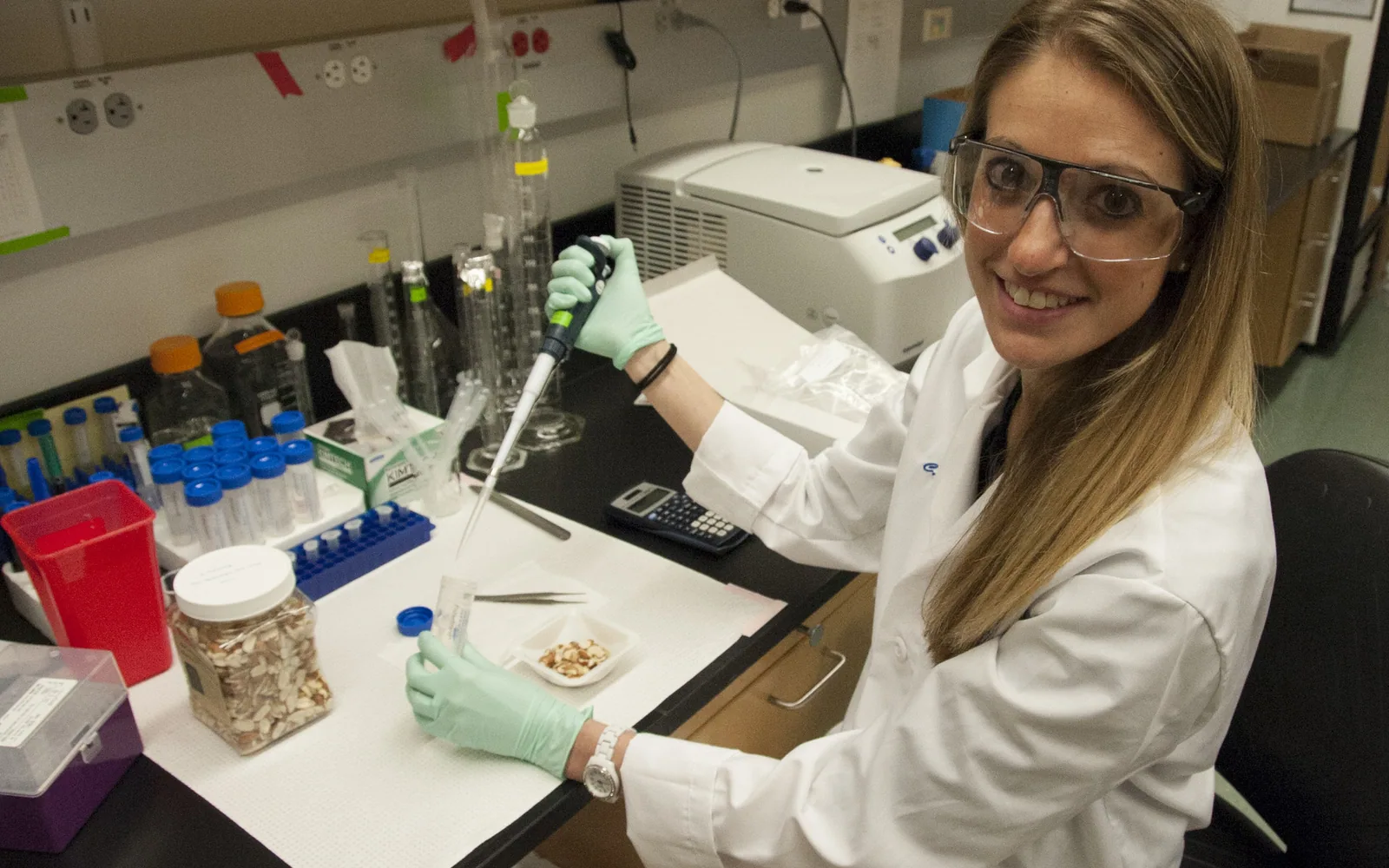
A certificate of analysis is a statement about a sample. It is not a statement about your container. Everything below follows from that.
Start with the sampling, not the results
Compare what your supplier's lab did with what an EU border control does. Official control of mycotoxins now runs under Commission Implementing Regulation (EU) 2023/2782, which repealed Regulation (EC) No 401/2006. For dried spices in lots under 15 tonnes, the plan uses 5 to 100 incremental samples depending on lot weight, giving an aggregate sample of 0.5 to 10 kg. For spices with a large particle size — nutmeg is the example given — the incremental sample is about 200 g, and a lot of 15 tonnes or more takes 100 incremental samples, a 20 kg aggregate, split into two 10 kg laboratory samples, each ground finely and homogenised before analysis. Sampling for dried herbs, herbal infusions, teas and powdered spices was amended again by Implementing Regulation (EU) 2024/885 of 20 March 2024.
A routine pre-shipment COA is rarely built on 10 kg drawn from a hundred points. So ask three questions before you read any number: how many incremental samples, from how many bags, and was the laboratory sample ground and homogenised. If nobody can answer, the certificate tells you about one scoop.
Second point from the same regulation: acceptance at official control is decided taking into account correction for recovery and measurement uncertainty. That cuts both ways. A result sitting just under a maximum level is not a margin. It is a result that another accredited lab could report above the limit.
Moisture — name the method
Codex CXS 327-2017 sets cumin at not more than 10 percent moisture, whole, cracked or ground. Straightforward, until you ask how it was measured. The Codex drafting for cumin lists ISO reference methods with AOAC and ASTA alternatives: entrainment distillation for moisture, gravimetry for ash. Oven drying and toluene distillation do not give the same figure on a spice carrying volatile oil. If your specification says "moisture max 10%" and nothing else, you have agreed a number without agreeing how to measure it, and a 0.4 percent argument at discharge is then unwinnable by either side.
Water activity is a different property and is usually absent unless you ask for it. If your process relies on aw for microbial stability, put it on the specification; moisture will not stand in for it.
Ash and acid-insoluble ash
Total ash is mineral content. Acid-insoluble ash is the part that will not dissolve in acid — in practice, sand and soil. It is the single most useful cleanliness number on a spice COA.
Codex cumin shows why a grade name is not a specification. Whole cumin, class I: total ash 8.5 percent maximum on dry basis, acid-insoluble ash 1.5 percent. Class II: 10.0 and 3.0. Class III: 12.0 and 4.0. Ground cumin: 9.5 and 1.5. All four are "Codex". A contract that says "as per Codex" permits class III, which is nearly three times the grit of class I. Codex CXS 353-2022 for dried chilli and paprika makes the default explicit: where the product is traded as unclassified, the class II provisions apply as the minimum.
Check the basis too. Ash and acid-insoluble ash are expressed on a dry basis; moisture is not. Numbers moved between the two bases quietly change by several percent.
"ASTA" is two different things
On a chilli or paprika certificate, ASTA normally means extractable colour, a spectrophotometric value from the ASTA methods manual. On a cleanliness specification, ASTA means the trade association's filth limits — whole dead insects, mammalian excreta, extraneous matter. They share three letters and nothing else.
Filth is not part of a normal chemical COA. It needs macroanalytical and microanalytical work. The US regulatory floor is the FDA defect action level, and the levels are commodity-specific: for fennel seed, action is taken where 20 percent or more of subsamples contain rodent or other excreta or whole insects, or an average of 3 mg per pound or more of mammalian excreta; for whole nutmeg, more than 10 percent insect-infested or mouldy pieces, with a maximum of 5 percent insect-defiled pieces by count. If you need those figures certified, order that test by name. It will not appear because you asked for a COA.
Microbiology and treatment
Codex commodity standards for spices do not fix microbiological numbers. They refer the question to the Codex principles for establishing microbiological criteria, CXG 21-1997. In practice your micro specification is contractual, which means the wording is yours to get right.
"Salmonella: absent" is incomplete. Absent from what mass, in how many units, by which method? Specify the test portion, the number of units and the method reference. The same applies to counts: a total plate count with no stated dilution or method is a number, not a limit.
Treatment belongs on the paperwork as well. The Spices Board operates mandatory sampling and testing of export consignments under its Quality Evaluation System, and has issued circulars requiring ethylene oxide testing and an official certificate for spices going to the EU. Your COA should state whether the lot was treated, by what process, and whether an EO test was run — none of that is implied by a clean micro line.
What the certificate still will not tell you
- Which pesticide analytes were in the panel, and their limits of quantification. A multi-residue screen is not a test for everything.
- The scope of the laboratory's accreditation for the specific method used.
- Whether the sampled lot is the lot loaded. Lot codes on the COA must match the bag markings and the packing list.
- Anything defensible about vague grade names. "Sortex clean", "Singapore quality" and "export quality" have no published definition. Replace them with a parameter table.
Practical note
We are a merchant exporter in Veraval, Gujarat. We do not own the processing plants, so the specification we agree with you is the specification we buy against — which is why we would rather argue about the parameter table before the proforma invoice than about a result after loading. Minimum order is 1,000 kg per product and mixed containers are fine. Every lot is tested before shipment and the certificates travel with the documents. Send us your specification, with methods named, and we will tell you plainly which lines we can hold and which we cannot.
Sources
- Codex CXS 327-2017 for cumin: 10% maximum moisture; whole cumin class I/II/III total ash 8.5/10.0/12.0% and acid-insoluble ash 1.5/3.0/4.0% dry basis; ground cumin 9.5% and 1.5%. — fao.org
- Codex drafting for cumin lists reference methods: ISO for moisture (distillation), total ash and acid-insoluble ash (gravimetry), volatile oil, with AOAC and ASTA alternatives. — fao.org
- Codex CXS 353-2022 for dried or dehydrated chilli pepper and paprika: where traded as unclassified, class II/grade II physical and chemical provisions apply as minimum requirements. — fao.org
- Implementing Regulation (EU) 2023/2782 repeals Regulation (EC) No 401/2006; dried spice lots under 15 tonnes sampled with 5 to 100 incremental samples giving a 0.5 to 10 kg aggregate sample. — eur-lex.europa.eu
- Consolidated 2023/2782: large-particle dried spices such as nutmeg use ~200 g incremental samples; lots of 15 tonnes or more take 100 incremental samples, 20 kg aggregate divided into two 10 kg laboratory samples, each ground finely and homogenised. — eur-lex.europa.eu
- Implementing Regulation (EU) 2024/885 of 20 March 2024 amends 2023/2782 as regards sampling of dried herbs, herbal infusions, teas and powdered spices. — eur-lex.europa.eu
- Acceptance of a lot at official control takes into account correction for recovery and measurement uncertainty (wording carried into the current sampling rules). — legislation.gov.uk
- ASTA cleanliness guidance and FDA defect action levels: fennel seed 20% of subsamples with excreta or whole insects, or average 3 mg/lb mammalian excreta; whole nutmeg more than 10% insect-infested or mouldy pieces with maximum 5% insect-defiled by count; ASTA cleanliness covers filth and extraneous matter. — downloads.regulations.gov
- Codex spice standards defer microbiological criteria to CXG 21-1997 rather than fixing numbers, and reference CXC 78-2017 on mycotoxins in spices. — fao.org
- Spices Board Circular 05/2022-23 on mandatory sampling and testing of export consignments of spices under the Quality Evaluation System. — indianspices.com
- Spices Board circular listing: mandatory testing for ethylene oxide and an official certificate for export of spices to the European Union. — indianspices.org.in
- FSSAI Food Products Standards chapter 2.9 sets spice parameters including moisture, total ash on dry basis, acid-insoluble ash on dry basis and volatile oil. — fssai.gov.in).pdf
Looking for a supplier?
Every product page carries its specifications, packing, container load and export-policy note. Tell us the item and quantity and you get a quotation with the exact figures for your market.
Get a quoteMore articles
26 October 2026
FOB, CFR or CIF for your first container from India
19 October 2026
Buying Indian groundnuts under the APEDA procedure
12 October 2026