
19 September 2026 · Buddha Overseas
How much actually fits in a container
A 40ft container holds about 2.3 times the volume of a 20ft, but roughly the same weight. For dense goods that makes it the wrong box — and for light goods it is the only one that makes sense.
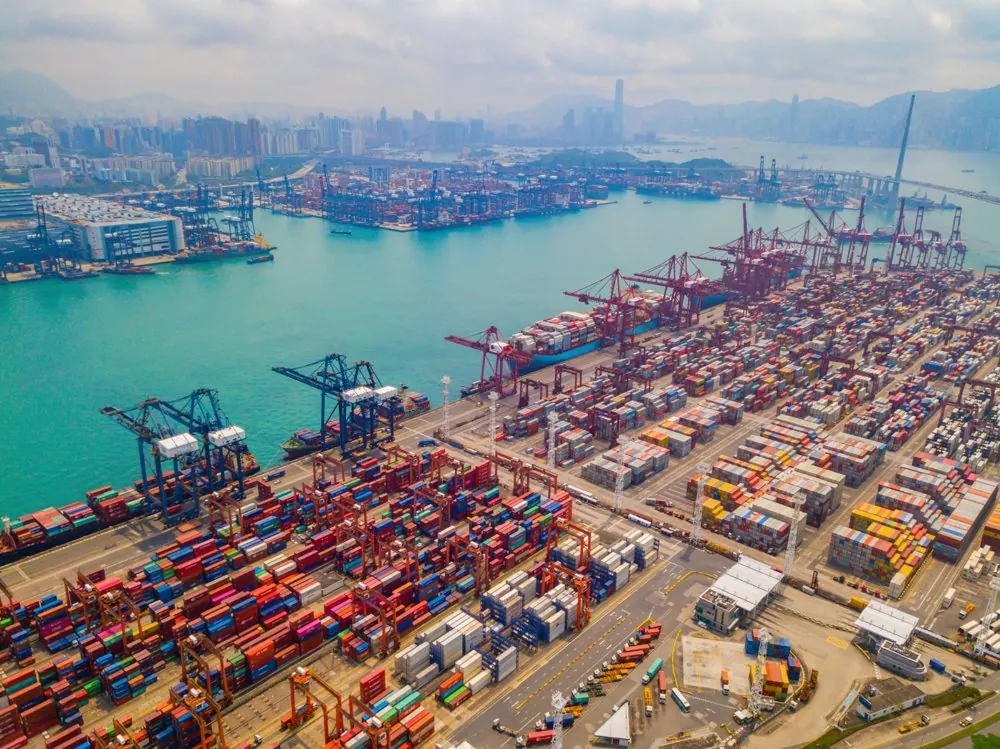
The question we are asked most often before a first order is how much goes in a container. The honest answer is that it depends entirely on the product, and the difference between two products is much larger than most buyers expect.
Two limits, and only one of them usually binds
Every container has a volume limit and a payload limit. Which one you hit first is decided by the density of the cargo.
- Dense goods — pulses, rice, seeds. These fill the weight before the space. A 20ft container takes roughly 21–26 MT.
- Spices and powders. Ground product traps air; a 20ft takes about 11–20 MT depending on the item and the packing.
- Light goods — onion flakes, dried leaves, fruit slices. These fill the space long before the weight. A 20ft takes about 2–10 MT.
That last band surprises people. A container of dehydrated onion flakes can "look full" at a fraction of the weight of the same box loaded with chana.
Why a 40ft container is not twice a 20ft
A 40ft holds about 2.3 times the volume of a 20ft, but its payload limit is only slightly higher — roughly 26–27 MT against a 20ft's limit.
So for pulses or rice, a 40ft is close to pointless: you reach the weight limit with a third of the box empty, and you have paid for space you cannot use. For onion flakes or dried leaves, the 40ft is the only sensible choice, because there the volume is what you are buying.
This is why we quote the two sizes separately on every product page rather than giving one number.
Mixed containers
Minimum order is 1,000 kg per product, not per container, and mixed loads are normal — a common first order is several spices and one or two dehydrated vegetables in a single 20ft.
Mixing also lets you balance the load: pairing a dense product with a light one uses both the weight and the space, which is usually cheaper per kilo landed than shipping either alone.
The figures on our product pages
Each product page shows its own typical 20ft and 40ft load. Those are working figures for planning, and the exact quantity is confirmed in the quotation once the packing is fixed, because packing changes the answer: 25 kg paper bags, PP bags, cartons and vacuum packs all stow differently, and a palletised load carries less than a floor-loaded one.
If you are working to a landed-cost target, send us the target and the destination port. It is often cheaper to change the packing or the container size than to change the price.
Looking for a supplier?
Every product page carries its specifications, packing, container load and export-policy note. Tell us the item and quantity and you get a quotation with the exact figures for your market.
Get a quoteMore articles
5 October 2026
Ethylene oxide: why EU spice consignments get rejected
28 September 2026
Reading a certificate of analysis line by line
23 September 2026